Working For A Living, Looking Back, The Path Forward, Exit Plan
6/5/2020 9:38:55 AM | By JWS | Comment on this
“It is difficult to get a man to understand something when his salary depends on his not understanding it.”
— Upton Sinclair
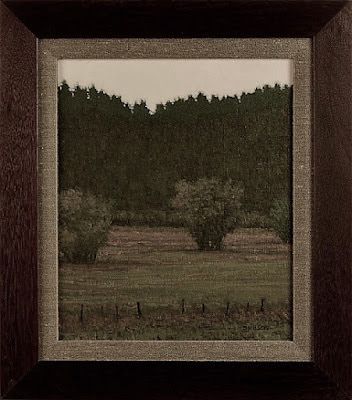
Island County in Washington State is made up entirely of islands in Puget Sound. The biggest are Whidbey and Camano, followed by seven smaller ones. Whidbey is a ferry ride away from Mukilteo, or for those who prefer driving, it can be reached from Seattle by heading north to Mt. Vernon, then to Anacortes, and over the Deception Pass Bridge. It’s an easy day trip for sleuthing out painting scenes and collecting memories for work in the studio.
It isn’t the Whidbey of my youth, but nothing stays the same. Much of the island remains rural, beautiful, and unspoiled — though it gets more crowded every year as people looking for a slice of paradise arrive one pilgrim at a time, slowly undoing what they came to find.
Until recently, I’d been working a day job, planning my painting getaways close enough that I could be back by Monday for meetings and other nonsense and silliness at work. Make no mistake — it is nonsense and silliness I’m talking about. Leadership in any large company is populated with buffoons, petty tyrants, absurdists, con men and women, grifters, narcissists, and the perpetually confused. Not all, but more than you’d guess if you haven’t worked in corporate America.
I got in the back door years ago and somehow kept a seat at the table, though the average worker’s lifespan is only a few years before being chewed up and spit out by the cutthroat environment. Some use their position as a stepping stone; others are just killing time. The new breed of corporate leader tends to make a bed they can’t lie in — and they try to skip town before the day of reckoning, usually within two to four years. It’s the nature of the beast. You pays your nickel and you takes your chances, as they say.
Any Fortune 500 company will have a large percentage of psychopaths — or perhaps more accurately, psychopath-lites — among its ranks. They do well in corporate jobs and often end up in leadership roles, thriving on superficial charm, manipulation, and the ability to lie with ease. Working under them is a bummer because of their grandiose sense of self-worth, lack of guilt or empathy, parasitic behavior, and their need to create chaos. The result is always the same: decreased productivity, low morale, and widespread discontent.
Looking back, it’s clear that the corporate takeover of America — let’s call it the Amazon Syndrome — will continue, and the psychopath-lites will multiply. These are the times we live in.
For a few readers of this blog, I’m going to refer to this archetype as Stone Man. If you’re working for Stone Man, it’s time to move on. Unless you become a sycophant to a narcissistic leader, your days will grow increasingly difficult until you’re eased out. There are better opportunities for talented people — and you are talented. The writing is on the wall. Get moving while you can; your ship is going down.
Perhaps there’s something to be said for bombast, bravado, and bullshit, but a steady diet of it is no one’s cup of tea. One of Stone Man’s chief traits is the ability to thrive in chaos. Knowing most people don’t, he’ll create chaos as a form of power and control. Add to that the risk of your job being outsourced or replaced simply because Stone Man wants to exert dominance, — or doesn’t understand the systems or talent he manages. That is your future.
Beware of leaders whose education is above what their IQ can process. Lacking rationality and skill, Stone Man overestimates his abilities but manipulates his own superiors through impression management. That’s why your week is spent gathering and shaping data to support Stone Man’s supposed greatness.
I’ve had time to observe leadership at every level of corporate America. I’ve been physically attacked, had things thrown at me, screamed at, and told secrets I’d rather not have known by C-suite executives and board directors. No kidding. It was all good fun, of course — I never took it too seriously. Just a game with constantly changing rules that demanded quick adaptation. I’ve had strange conversations, bizarre meetings, hysterical one-sided negotiations, and even friendships with presidents and CEOs of recognizable companies. I’ve seen how their minions behave around them. I’ve apologized for my bosses’ buffoonish behavior more times than I can count and pretended they were the smartest in the room while everyone was laughing at them.
Through all those years in corporate America, one quote from G. I. Gurdjieff kept ringing in my head — especially during the last few years:
“A considerable percentage of the people we meet on the street are empty inside, that is, they are actually already dead. It is fortunate for us that we do not see and do not know it. If we knew what a number of people are actually dead and what a number of these dead people govern our lives, we should go mad with horror.”
I did see and did know it. But I kept my buffers* intact to survive — and sometimes thrive. It wasn’t pretty, and I may yet go mad with horror.
For me, the working battle is over. It’s time for retirement — for life as a high-desert gardener, landscape painter, and printmaker in southwest Montana, if things roll my way. If not, I’ll just be another casualty of COVID-19 or some other curveball that ended with a swing and a miss, bases loaded, in the last game of the World Series. The game is rigged — but we knew that going in, except for the most naïve among us. We’re here to play the game, not to win or lose it.
But enough of that. Let’s look forward.
I believe there’s still time to paint three to five masterpieces before my eighty-fifth birthday — and so far, the stars seem properly aligned. The last masterpiece I paint will also be my exit. I plan to walk straight into that landscape painting and never be heard from again.Think it can’t be done? Watch me. It’s been done before.
Katsushika Hokusai was said to have achieved such a high level of mastery that, at the end, he walked into one of his own prints and disappeared. Some claim that if you look closely, you can still see a figure moving within certain of his landscapes — and that figure is Hokusai himself.
I, for one, don’t doubt it.
* In the Gurdjieff Work, “buffers” are the unconscious barriers people use to protect themselves from reality. (my definition) I’ve also found they can be consciously used — to keep from going mad with horror. (my opinion)
Topics
Archives
Recent Works |
|||

|

|

|

|

|

|

|

|
